


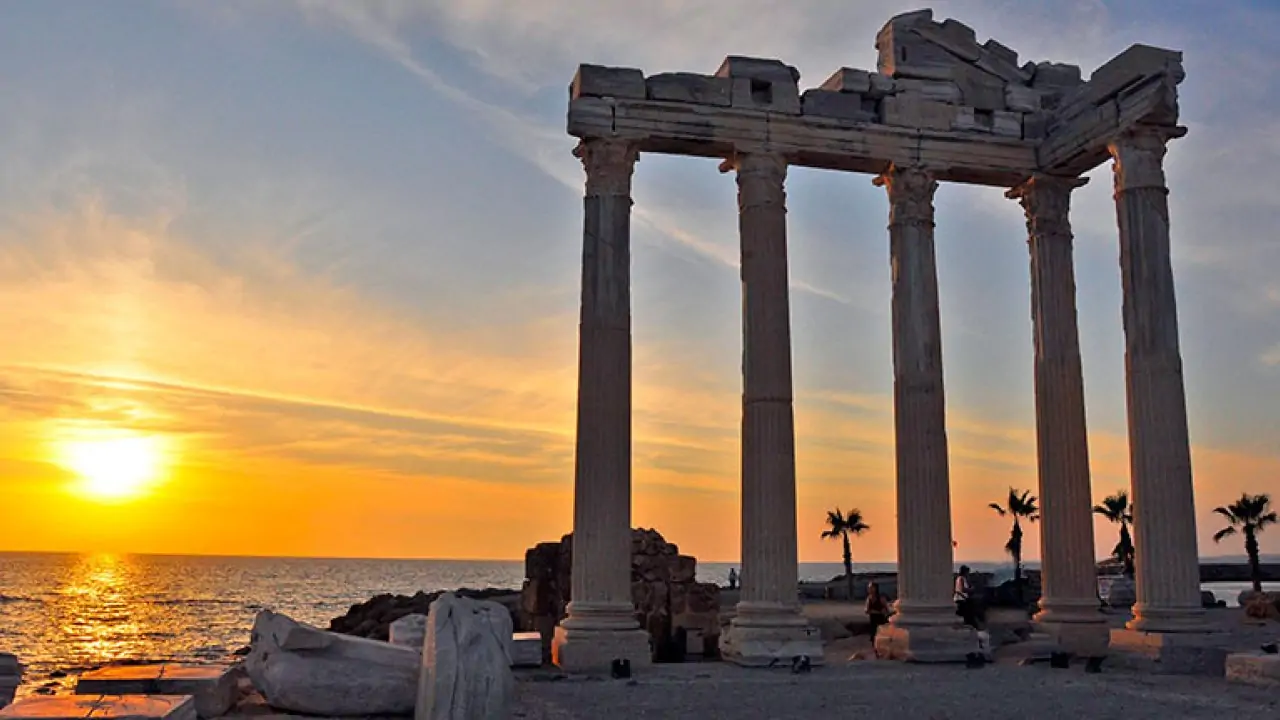
Imagine standing where ancient mariners once prayed for safe passage, where the whispers of oracles once mingled with the Mediterranean breeze, and where the sun sets behind columns that have witnessed millennia. Welcome to the Temple of Apollo in Side, Turkey—not merely a ruin, but a portal to a world where myth, history, and breathtaking scenery collide. As a professional guide who has walked these stones countless times, I invite you on a journey beyond the standard brochure. We'll uncover the secrets of this sacred site, explore its hidden context, and discover why it remains one of the most poignant and photogenic spots on the entire Turkish Riviera.
Where Myth Meets Stone: The Heart of Ancient Side
Perched on a slender peninsula jutting into the turquoise waters, the ancient city of Side was a powerhouse of trade, culture, and religion. At its spiritual and civic core stood the Temple of Apollo. Built around 150 BC during Side's Hellenistic peak under Roman influence, this temple was dedicated to Apollo, the god of light, music, prophecy, and—crucially for a port city—the protector of sailors. Its companion, the Temple of Athena (goddess of wisdom and warfare), stood nearby, forming a powerful divine duo watching over the city's fortunes.
The temple is a sublime example of the Corinthian order, the most ornate of the classical Greek architectural styles. Imagine six elegant, fluted columns on each of its longer sides and eleven on the shorter, crowned with intricate capitals of carved acanthus leaves. While time and earthquakes have left only a handful of columns standing, their silhouette against the sky is iconic. This wasn't just a place of worship; it was a statement. The gleaming white marble, visible from sea, proclaimed Side's wealth, piety, and connection to the Greco-Roman world to every approaching ship.

A Guide's Perspective: Walking the Sacred Ground
Visiting the temple is best done in the late afternoon. As the heat of the day softens, the golden hour light bathes the marble in a warm glow, and the crowds thin. Enter the site from the main colonnaded street of ancient Side. As you approach, let the modern world fade. Listen for the echo of sandals on stone, the distant murmur of the agora (marketplace), and the scent of salt and incense.
Stand before the columns and look east. The alignment is deliberate—facing the rising sun, Apollo's domain. Notice the intricate carving on the column bases and the massive stone blocks of the platform (the crepidoma). Look for the scattered architectural fragments around the site; pieces of the architrave (the lintel stone above the columns) and frieze tell a story of sudden collapse, likely from a major earthquake in the 10th century AD.
The most magical moment is sunset. This is when the temple truly comes alive. The sky transforms into a canvas of oranges, pinks, and purples, framing the darkening columns. It's a photographer's paradise and a moment of pure tranquility. This vista is arguably one of the most romantic and historically charged in all of Turkey.
The Theatre of Side: Echoes of the Ancient World
A short 10-15 minute walk from the Temple of Apollo brings you to one of the most impressive and well-preserved Roman theatres in Anatolia. With a capacity for over 15,000 spectators, the Side Antique Theatre is monumental. Unlike Greek theatres built into hillsides, this is a Roman-style structure, built on flat land using complex vaulted arches for support. Walk up to the top tier (the *summa cavea*) for a breathtaking view over the stage building (*scaenae frons*) and out towards the modern town and sea. Imagine the roar of the crowd during gladiatorial contests or theatrical performances. The acoustics are still remarkable—stand in the orchestra circle and whisper; you'll be heard at the highest seats.

The Harbour & Beaches: Lifeblood of the City
Just steps from the Temple of Apollo lies the ancient harbour. This was the economic engine of Side. Today, it's a picturesque marina filled with yachts and gulets, but look closer. The original Roman quays and breakwaters are still visible beneath the modern additions. From here, Side exported olive oil, wine, and slaves. Stroll along the harbourfront to the peninsula's tip, where you'll find a charming lighthouse and small beaches nestled between ancient walls. The contrast of swimming in crystal-clear water with millennia-old ruins as your backdrop is an experience unique to Side.

Side Archaeology Museum: Housing the Treasures
Housed in a beautifully restored 5th-century AD Roman bath complex just a 10-minute walk from the temple, this museum is a must-visit. It provides essential context. Here you'll see exquisite statues, sarcophagi, and artifacts excavated from the Apollo Temple complex and the city. Look for the stunning statues of the Three Graces and Nemesis. Seeing these artifacts in a nearby location helps you mentally reconstruct the grandeur that once adorned the temple site.
The Temple of Tyche: Goddess of Fortune
A mere 5-minute walk north of the Apollo Temple, in the ancient agora, stands the smaller Temple of Tyche. Dedicated to the goddess of fortune and prosperity, this temple reflects Side's mercantile soul. Its more modest scale offers a fascinating comparison to the grandeur of the Apollo complex, showing the diversity of worship in the city.
Beyond Side: A Cluster of Ancient Wonders
The Temple of Apollo is the crown jewel of a region astonishingly rich in archaeological sites. Renting a car for a day allows you to embark on an unforgettable historical road trip.
Seleukeia (Lyrbe): The Hidden Mountain City
About a 30-minute drive north into the Taurus Mountains lies Seleukeia, also known as Lyrbe. This is for the true explorer. Abandoned and reclaimed by nature, it's a sprawling, rarely-visited city with a stunningly preserved agora, a Byzantine church, and tombs. The silence here is profound, broken only by goat bells. It offers a completely different, wilder experience compared to the coastal sites.
Aspendos: The Acoustic Marvel
Approximately a 45-minute drive west, Aspendos boasts the best-preserved Roman theatre in the world. Its acoustics are legendary—a coin dropped on the stage can be heard from the highest seat. The sheer scale and perfection of its 15,000-seat auditorium and two-story stage building will leave you speechless. The nearby Roman aqueduct is also a monumental feat of engineering.
Perge: A Walk Through a Roman Metropolis
An hour's drive west brings you to Perge, one of the most complete Roman cities you can walk through. Follow its colonnaded main street, see the sprawling agora, the immense baths, and a stadium that could seat 12,000. Perge gives you the full urban experience—the everyday life that centered around temples like the one in Side.
Essential Visitor Tips & FAQs
Best Time to Visit: Spring (April-May) and Autumn (September-October) offer ideal weather. Visit the temple early morning or late afternoon to avoid crowds and heat.
Ticket & Access: The temple is within the open archaeological zone of Side. There is a single entry ticket that typically covers access to the main street, agora, theatre, and temple area. Check for a combined museum ticket.
Respect the Site: Do not climb on the fragile columns or walls. The stones are weathered and can be damaged.
What to Bring: Sturdy walking shoes, sun protection (hat, sunscreen, water), and a camera.
Frequently Asked Questions (FAQs)
Q: What are the opening hours for the Temple of Apollo in Side?
A: The archaeological site is generally open from 8:00 AM to 7:00 PM in summer, with shorter hours in winter. Hours can change, so it's best to check locally on the day of your visit.
Q: Is there an entrance fee?
A: Yes, there is an entrance fee for the Side archaeological site, which includes the temple, main street, and agora. The theatre sometimes requires a separate or combined ticket. The Museum has its own ticket.
Q: How much time should I allocate to visit the temple and Side ancient city?
A: To fully explore the temple, harbour, main colonnaded street, agora, and theatre at a leisurely pace, allocate at least 3-4 hours. A full day allows you to add the museum and relax by the harbour.
Q: Can you swim near the Temple of Apollo?
A: Yes! There are small public beaches right next to the temple site and along the peninsula. Swimming with the ancient ruins in view is a magical experience.
Q: What is the difference between the Temples of Apollo and Athena?
A: They were a paired set of temples in the city's most sacred precinct. Apollo's temple was larger and more prominent. Today, the remains of the Athena Temple are just a few steps away, marked by its own set of standing columns and platform, often less crowded.
Q: Is it accessible for visitors with mobility issues?
A: The ground around the temples is uneven ancient stone and gravel. While the wider site is flat, wheelchairs and strollers can be challenging to maneuver. The theatre has many steps. The museum, housed in an old bath, has some level access but also steps.
In conclusion, the Temple of Apollo at Side is more than a checklist item. It's a place where you can feel the weight of history, the artistry of a lost civilization, and the timeless beauty of the Mediterranean. It’s the perfect starting point for a deep dive into Turkey's magnificent ancient past. Come, walk in the footsteps of priests, merchants, and emperors, and let the stones tell you their story.